Chime Labs AI Platform
A Sydney AI startup for trades, backed by 500 Global. An AI receptionist that books the job. I run product end to end.
A Sydney AI startup for trades, backed by 500 Global. An AI receptionist that books the job. I run product end to end.
Product and design lead · Chime Labs, Sydney · December 2025 – present
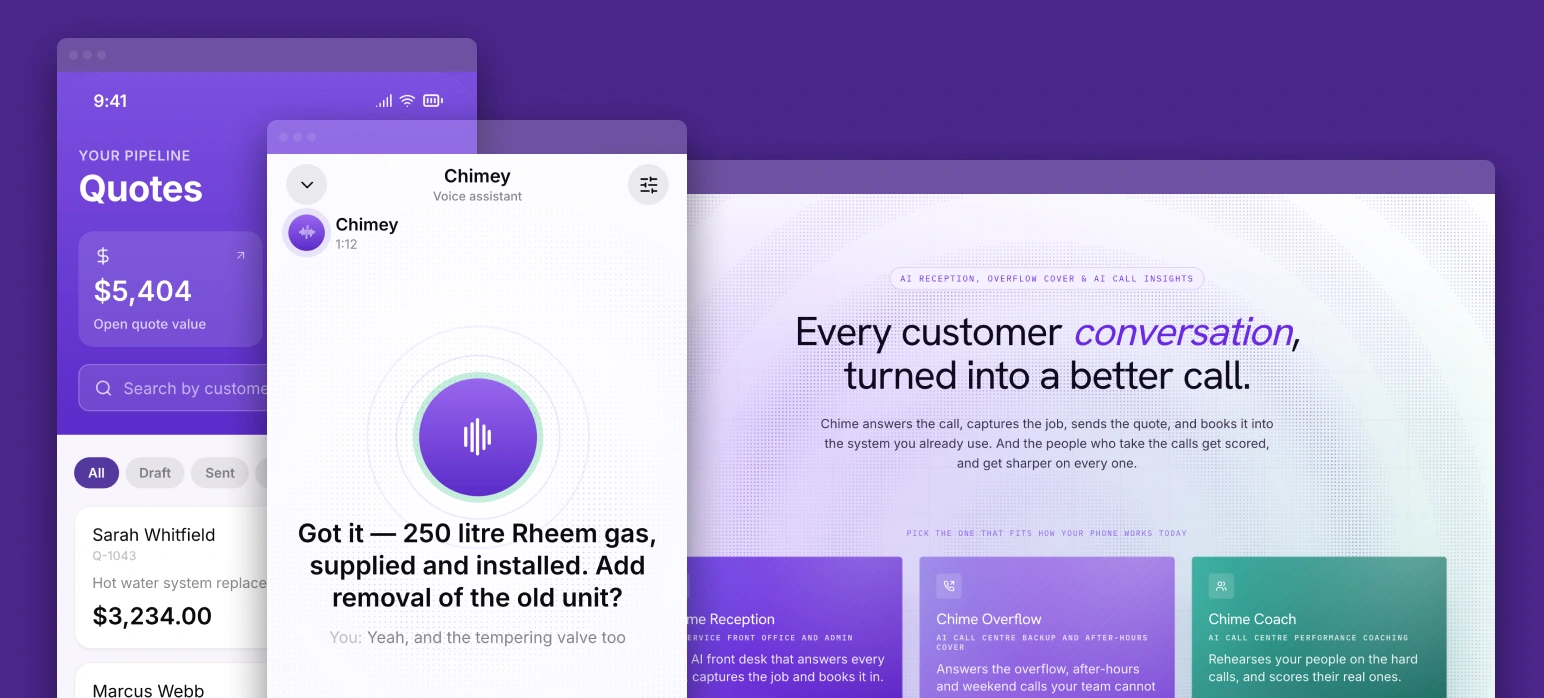
For a trades business the phone is the whole funnel. A missed call is a lost job, and a quote sent three days late is a job someone else has already done. Chime Labs answers that with an AI receptionist — every inbound call picked up, qualified, and booked straight into the tools the business already runs.
The product worked. Reaching it was the problem.
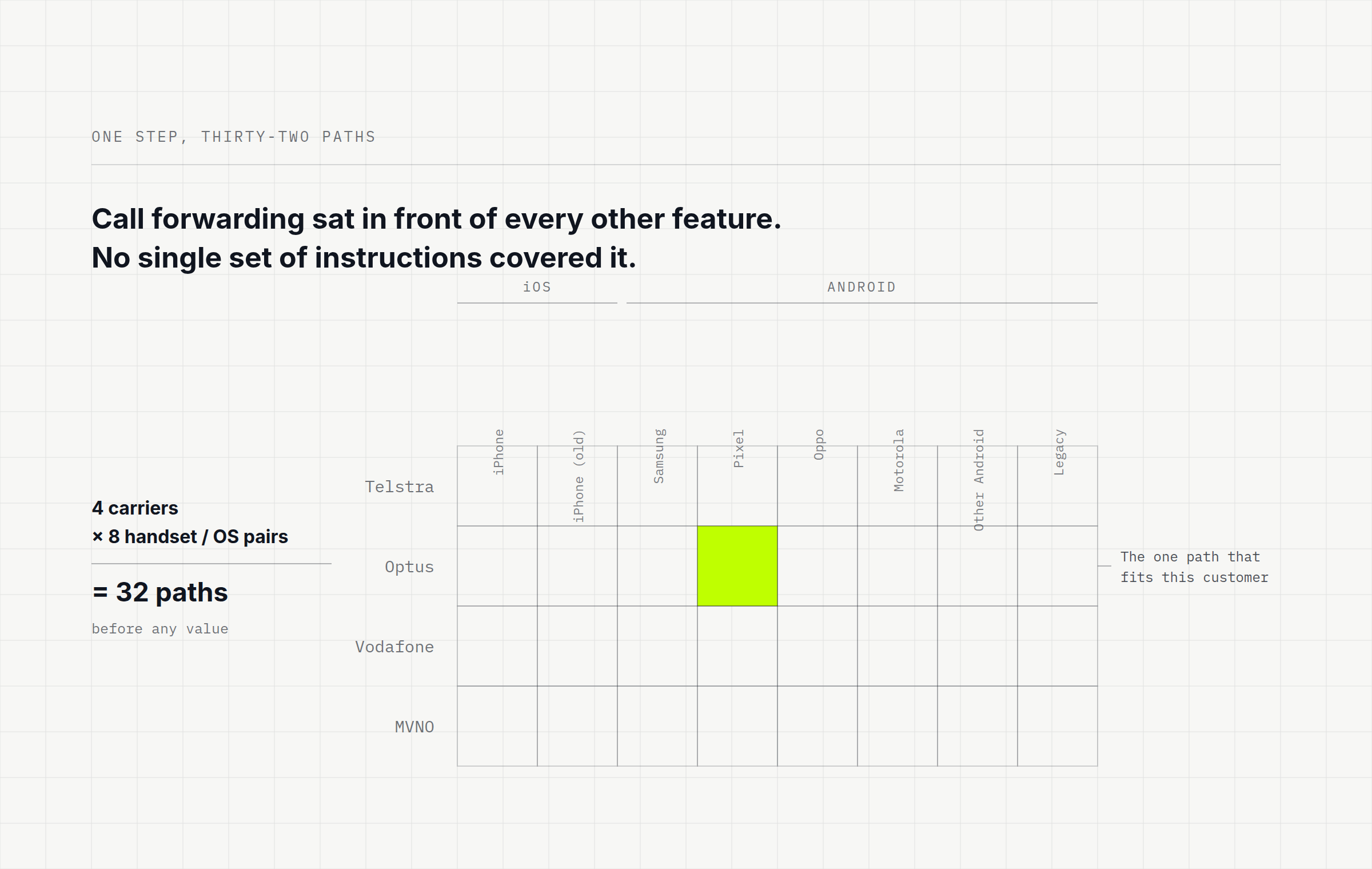
To switch the receptionist on, a tradie has to forward their existing business number to a new one. That means either ringing their carrier to set conditional forwarding, or finding it themselves in phone settings — and the steps change with the carrier, the operating system and the handset. There is no single set of instructions that covers it.
So the hardest step in the product sat at the very front of onboarding, before a single call had been answered. It asked the least technical audience in the market to do the most technical thing in the system. Everything behind it — every feature, every integration — was worth nothing to a customer who stalled there.
I pulled five sources together — a verified set of 282 customers, 30,600 calls and 11,760 real conversations, alongside the CRM, the lifecycle tool and the platform database. The shape was unambiguous.
That last line reframed the work. Conversations are what convert, and almost nobody was reaching four of them. The reason sits in the 71%: forwarding your only number routes your children's school and your partner through an AI receptionist. Almost nobody refuses it. They simply never do it, which is why it had never shown up anywhere as an objection.
The sales pipeline was already named after the problem — its central transition is literally calls not diverted, to calls diverted, to paid. Diversion had been modelled as the gate, and two years went into pushing customers through it rather than removing it. A campaign built specifically to fix it sent 242 emails and converted nobody in forty-five days.
Stop asking for the phone line first.
The redesign makes the Chime number a second line rather than a replacement, so the tradie keeps their own number and nothing about their day changes on day one. Conditional forwarding comes next — their phone rings first, Chime catches what they miss. Full diversion becomes an upgrade the product earns rather than a toll it charges at the door. Calendar connection gets equal billing with phone setup, because the booking rate swings by an order of magnitude on whether a calendar is connected at all. And the trial gets measured in conversations rather than days.
For the customers who do forward, I rebuilt the step around the branching reality rather than a single happy path, resolving carrier, operating system and handset for them instead of handing them the decision.
My first proposal was to let people reach value without touching the phone line at all: connect the job system, organise the queue, generate a quote. The data refused it. Real conversations are what convert, and the job queue had twelve unique users in three months. Routing around the phone would have produced activated accounts that never paid.
I had also assumed we were losing to $99 competitors on price. There is no price objection recorded anywhere in the business, and the channel where category perception operates delivers 1.3% of contacts. We lose to evaporation, not comparison — which made my own earlier repositioning work the slower bet, and I wrote it up that way.
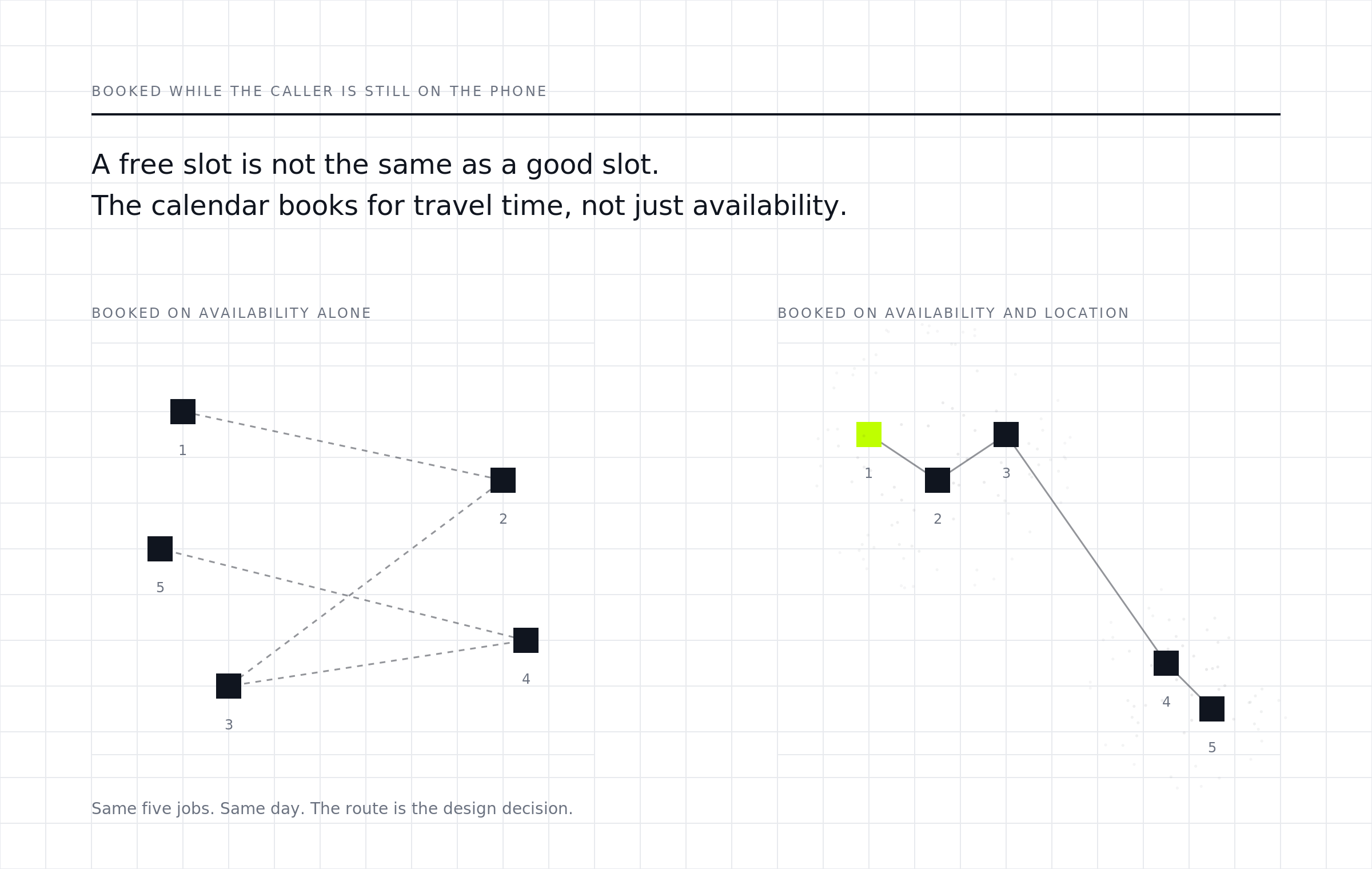
A design system under a platform that had been built fast to prove the problem, which is the right call until you start shipping weekly. A job calendar the receptionist books into live, while the caller is still on the phone — steering toward days where the job sits near others already booked, because two jobs on opposite sides of the city is an hour of unpaid driving, not a scheduling detail. Integrations into ServiceM8, ServiceTitan, Simpro and the rest, because a tradie is not moving off the system they already run on. Repositioning the platform into three products on one engine, and rebuilding the website to say so. And a quoting iOS app, now on the App Store, that turns a voice note after a site visit into a drafted quote.
The second-line redesign is specified and awaiting a decision, with a split test defined: share of accounts reaching four real conversations in fourteen days, and paid conversion at thirty and sixty days as the check that the first number means anything.
Onboarding completion and booking usage are both up since the forwarding rebuild. The sample is still small and the product is still young, so I would rather say that plainly than put a multiple on it.
The measure that matters is completion at the forwarding step. It is instrumented and running. Ask me again in two quarters.